https://www.familysearch.org/tree/person/sources/G61B-Z34
De creatione Venedig, 1541 - 1542 Portolan Atlas Battista Agnese. unus ex maximis Cartographers Italian Renaissance. Genuensis origo, Agnesa agebat Venetiis ab 1536 usque ad mortem.
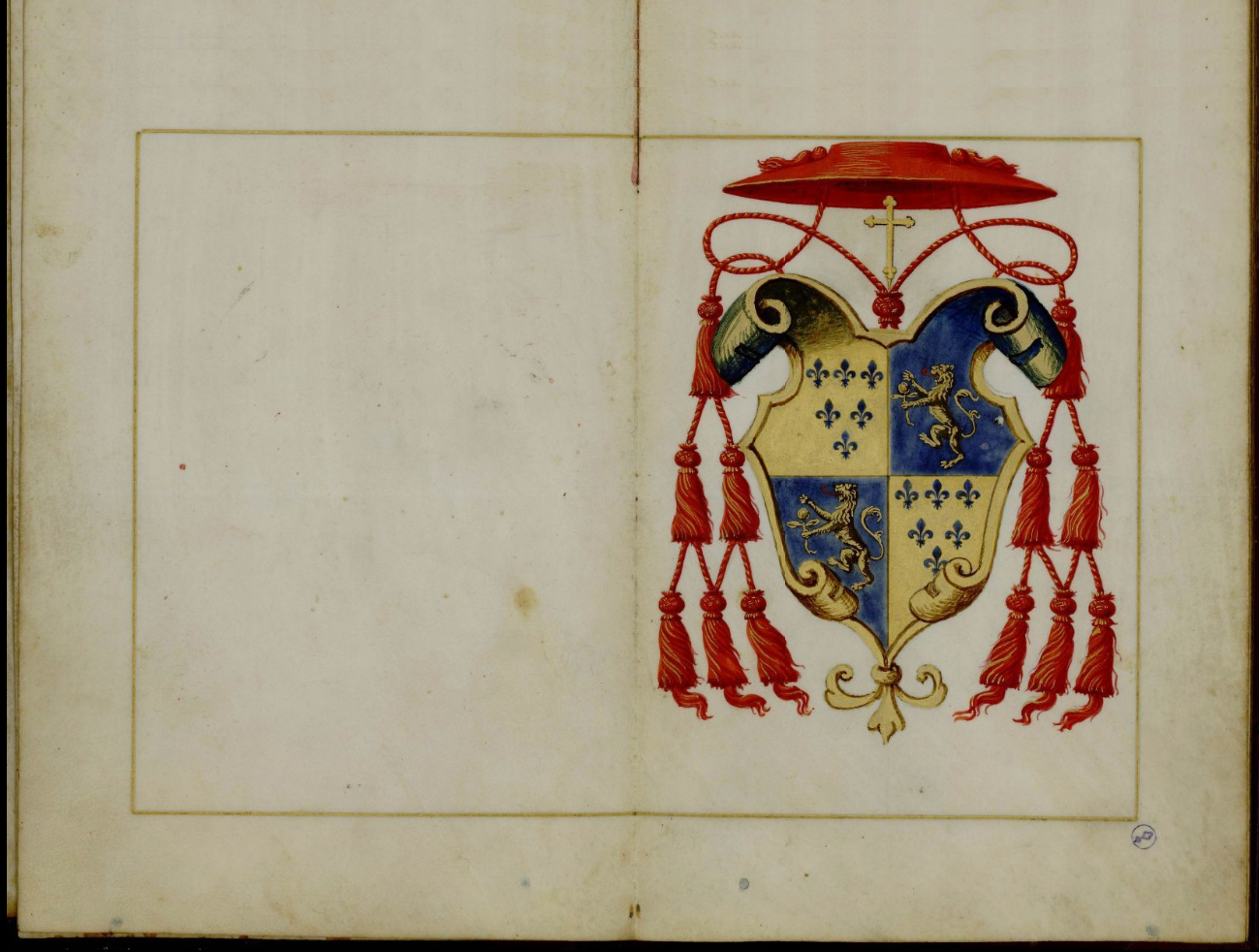
Questo atlante portolano è attribuito a Battista Agnese (1514-64), uno dei più importanti cartografi italiani del Rinascimento. Di origine genovese, Agnese fu attiva a Venezia dal 1536 fino alla morte. È probabile che abbia diretto una tipografia a tutti gli effetti dove sono state realizzate le sue mappe. Ha prodotto circa 100 atlanti, di cui più di 70 esistono ancora, sia con la sua firma che attribuiti al suo studio. Considerati opere d'arte per la loro alta qualità e bellezza, gli atlanti sono per lo più portolani, o atlanti nautici, stampati su pergamena per funzionari di alto rango o ricchi mercanti piuttosto che per l'uso in mare. L'atlante qui presentato contiene tabelle di declinazione, una sfera armillare, lo zodiaco e mappe che mostrano: le coste orientali e occidentali del Nord America; l'Oceano Atlantico e ad ovest dall'Arabia fino alla costa orientale del Sud America dalla forma speculativa; la regione dall'Africa al sud-est asiatico; Europa occidentale; Spagna e Nord Africa; il Mediterraneo (varie mappe); il mare nero; e la regione intorno alla Grecia e l'attuale Turchia. Comune alla maggior parte degli atlanti di Agnese e qui presente, oltre a una mappa mundi ovale con putti, o teste di vento, in nuvole blu e oro, che rappresentano i classici 12 punti del vento da cui si sono evoluti i moderni punti cardinali. Questo manoscritto è stato realizzato per il cardinale Guido Ascanio Sforza di Santa Fiora (1518-64), il cui stemma si trova al foglio 1 recto. La rilegatura ha un piccolo compasso coperto da un disco di vetro incastonato nel contropiatto. Il modo in cui il mondo conosciuto è rappresentato come una proiezione ovale con paralleli equidistanti è diventato di uso comune in seguito, soprattutto grazie al cartografo, ingegnere e astronomo piemontese Giacomo Gastaldi (circa 1500--circa 1565) e al cartografo fiammingo Gerardus Mercator (1512--94). L'atlante appartenne a Vittorio Emanuele II, re di Sardegna dal 1849 al 1861 e primo re dell'Italia unita dal 1861 fino alla sua morte nel 1878.
Battista Agnese (1514-64) was a masterful geographer and mapmaker. Born in Genoa, he worked in Venice from 1536 to 1564 and became one of the most important figures in Renaissance cartography. Researchers differ on the total number of manuscript atlases created by Agnese; he produced at least 39 portolan, or maritime, atlases, ten of them signed and dated. All are distinguished by their neat calligraphy and are esteemed for their high quality and beauty. None was intended for use on board ship; they served as ceremonial gifts and as adornments to the libraries of the well-to-do. This atlas contains 20 pages of maps. A heraldic bookplate of the court library in Munich appears at the front of the book, followed by declination tables and the zodiac. On the oval world map, the continents appear in green, with somewhat speculative outlines of North and South America. Cherubs, or wind heads, representing the classical twelve-point winds from which modern compass directions evolved surround the map. Other maps show the Pacific, Atlantic, and Indian Oceans, and the Baltic, Mediterranean, and Black Seas. Characteristic of all Agnese atlases are the routes of travels recorded on the map of the world. The Munich copy presented here shows, in blue, Magellan's voyage from Lisbon, through the straits named after him, to the Moluccas, and the return voyage of the one surviving ship around the Cape of Good Hope (1519-22). A second line—faintly discernible, originally inscribed in silver-traces Pizarro's voyage of 1521, which started from Cadiz, Spain, and crossed the Isthmus of Panama to reach the west coast of South America, thus inaugurating the Spanish conquest of Peru. // Bayerische Staatsbibliothek, Department of Manuscripts and Rare Books, 2019
https://www.digitale-sammlungen.de/en/view/bsb00003259?page=,1
https://www.digitale-sammlungen.de/en/view/bsb00003259?page=,1
https://www.loc.gov/resource/gdcwdl.wdl_19478/?r=-0.434,0.298,1.576,1.001,0
https://www.digitale-sammlungen.de/en/details/bsb00003259
o de cima é referente
a Biblioteca da Bavária Alemanha
Munique Munchen Bibliothek
Você quis dizer: munchen Bibliothek
Resultados da pesquisa
a seguir o livro que está na Biblioteca Mundial WDR.org
About this Item
- Title
- Portolan Atlas of Battista Agnese.
- Other Title
- Portolano
- Summary
- This portolan atlas is attributed to Battista Agnese (1514-64), one of the most important Italian Renaissance cartographers. Of Genoese origin, Agnese was active in Venice from 1536 until his death. He is likely to have directed a full-fledged printing house where his maps were made. He produced approximately 100 manuscript atlases, of which more than 70 still exist, either with his signature or attributed to his studio. Considered works of art for their high quality and beauty, the atlases are mostly portolan, or nautical, atlases printed on vellum for high-ranking officials or wealthy merchants rather than for use at sea. The atlas presented here contains declination tables, an armillary sphere, the zodiac, and maps showing: the east and west coasts of North America; the Atlantic Ocean and west from Arabia to a speculatively shaped east coast of South America; the region from Africa to Southeast Asia; Western Europe; Spain and North Africa; the Mediterranean (several maps); the Black Sea; and the region around Greece and present-day Turkey. Common to most Agnese atlases and present here as well is an oval mappa mundi with cherubs, or wind heads, in blue and gold clouds, which represent the classical 12 wind points out of which evolved the modern compass points. This manuscript was made for Cardinal Guido Ascanio Sforza di Santa Fiora (1518-64), whose coat of arms is found on folio 1 recto. The binding has a small compass covered by a glass disc embedded in the pastedown. The way in which the known world is represented as an oval projection with equidistant parallels came into common use later on, mainly thanks to the Piedmontese cartographer, engineer, and astronomer Giacomo Gastaldi (circa 1500--circa 1565) and the Flemish cartographer Gerardus Mercator (1512--94). The atlas belonged to Victor Emmanuel II, king of Sardinia from 1849 to 1861 and the first king of united Italy from 1861 until his death in 1878.
- Contributor Names
- Agnese, Battista, 1514-1564 Cartographer.
- Sforza di Santa Fiora, Guido Ascanio, 1518-1564 Patron.
- Victor Emmanuel II, King of Italy, 1820-1878 Owner.
- Created / Published
- [place of publication not identified] : [publisher not identified], [1536 to 1564]
- Subject Headings
- - 1536 to 1564
- - Coastlines
- - Discoveries in geography
- - Mappae mundi
- - Portolan charts
- Notes
- - Title devised, in English, by Library staff.
- - Original resource extent: 15 folios (12 maps) : parchment ; 20.6 x 13.8 centimeters.
- - Reference extracted from World Digital Library: Maria Rosaria Manunta, "Schede," in Biblioteca Reale Torino, edited by Giovanna Giacobello Bernard (Florence: Nardini, 1990).
- - Original resource at: Royal Library of Turin.
- - Content in Latin.
- - Description based on data extracted from World Digital Library, which may be extracted from partner institutions.
- Medium
- 1 online resource.
- Digital Id
- https://hdl.loc.gov/loc.wdl/wdl.19478
- Library of Congress Control Number
- 2021668747
- Online Format
- compressed data
- image
- LCCN Permalink
- https://lccn.loc.gov/2021668747
- Additional Metadata Formats
- MARCXML Record
- MODS Record
- Dublin Core Record
- IIIF Presentation Manifest
- Manifest (JSON/LD)
Seeatlas (Alte Welt und Terra Nova) - BSB Cod.icon. 136
- By
- Battista Agnese
- Creator
- Agnese, Battista, 1514-1564AuthorGND: 119115115
- Subject
- Portolan
- Published
- Venedig
- Date
- 1541 - 1542
- Extent
- 15 Bl. - Pergament
- Dimensions
- 22,5 x 16,5 cm
- Languages
- Latin; Spanish
- Notes
- Portolanatlas
- Kurzaufnahme einer Handschrift
- Description
- Battista Agnese (1514-64) was a masterful geographer and mapmaker. Born in Genoa, he worked in Venice from 1536 to 1564 and became one of the most important figures in Renaissance cartography. Researchers differ on the total number of manuscript atlases created by Agnese; he produced at least 39 portolan, or maritime, atlases, ten of them signed and dated. All are distinguished by their neat calligraphy and are esteemed for their high quality and beauty. None was intended for use on board ship; they served as ceremonial gifts and as adornments to the libraries of the well-to-do. This atlas contains 20 pages of maps. A heraldic bookplate of the court library in Munich appears at the front of the book, followed by declination tables and the zodiac. On the oval world map, the continents appear in green, with somewhat speculative outlines of North and South America. Cherubs, or wind heads, representing the classical twelve-point winds from which modern compass directions evolved surround the map. Other maps show the Pacific, Atlantic, and Indian Oceans, and the Baltic, Mediterranean, and Black Seas. Characteristic of all Agnese atlases are the routes of travels recorded on the map of the world. The Munich copy presented here shows, in blue, Magellan's voyage from Lisbon, through the straits named after him, to the Moluccas, and the return voyage of the one surviving ship around the Cape of Good Hope (1519-22). A second line—faintly discernible, originally inscribed in silver-traces Pizarro's voyage of 1521, which started from Cadiz, Spain, and crossed the Isthmus of Panama to reach the west coast of South America, thus inaugurating the Spanish conquest of Peru. // Bayerische Staatsbibliothek, Department of Manuscripts and Rare Books, 2019
- Content type
- Map
- Manufacturing type
- Manuscript
- Media type
- Book
- Identifier
- OCLC: 163414503
- BSB-Hss: BSB-Hss Cod.icon. 136
- B3Kat ID
- BV021591576
- BSB ID
- 9400599
- Holding institution
- München, Bayerische Staatsbibliothek
- Call number
- Cod.icon. 136
- Shelf group
- Codices iconographici - Bildhandschriften mit wenig oder nur erläuterndem Text
- URN
- urn:nbn:de:bvb:12-bsb00003259-9
- Digital Object ID
- bsb00003259
- Extent
- 23 scans
- Digitized
- 12/13/2007
- Digitized by
- Bayerische Staatsbibliothek
In collection


https://daten.digitale-sammlungen.de/bsb00001421/images/index.html?fip=193.174.98.30&seite=405&pdfseitex=